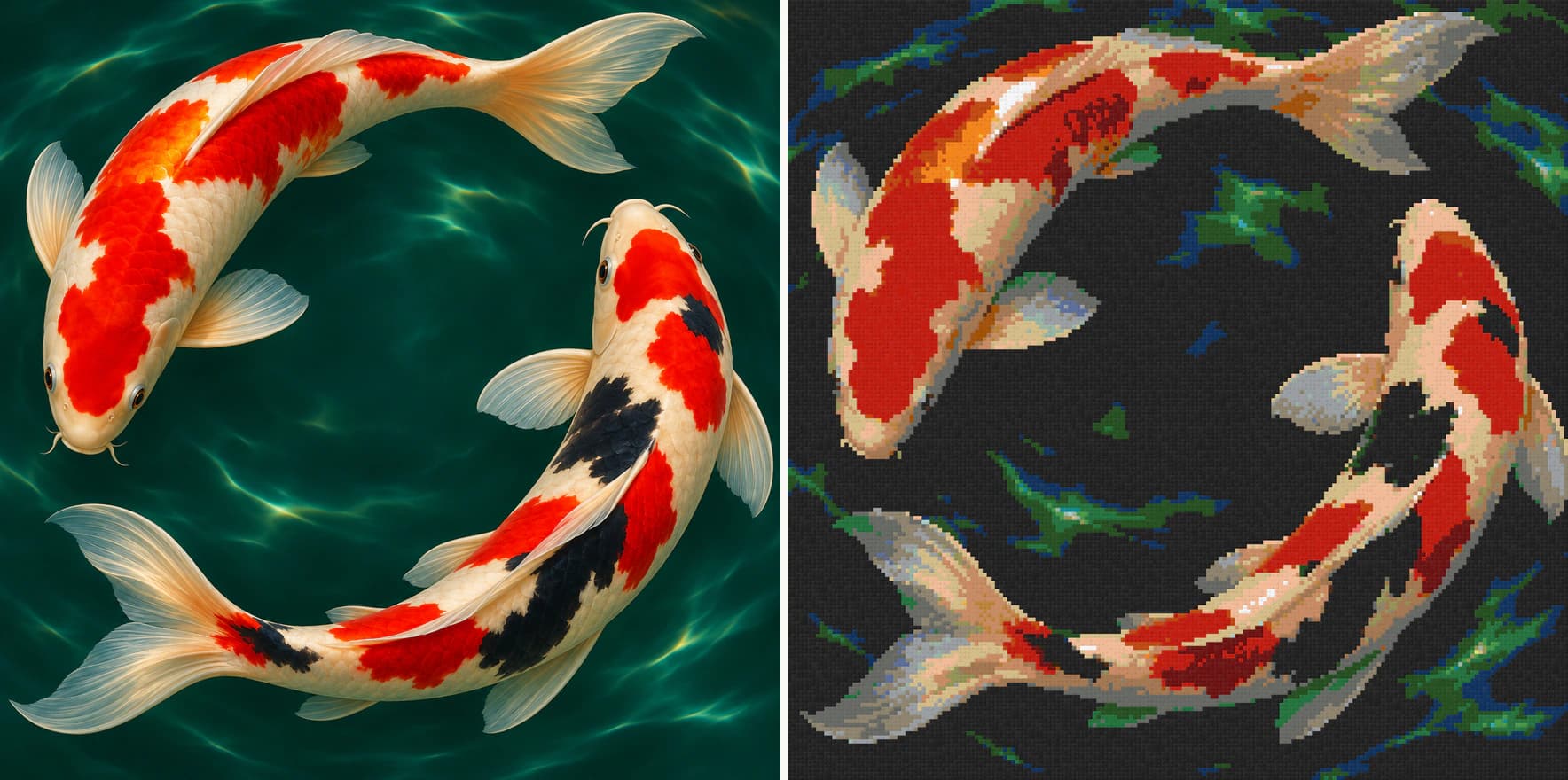
Follow the red markings down the back of the koi on the left. They lead you to its nose, where a pair of pale whiskers reaches into the water. Across the pond, the second fish is already turning the other way. Follow that curve and you end up back where you started. That little trip around the picture is what we wanted to keep when we turned Koi Club into a brick mosaic.
Leave room for the water
One of the most useful things you can do with the original image is look at the space between the fish. There’s a broad pocket of deep green water in the middle. It narrows beside the fins and opens up again near the tails. That changing width lets you see where each fish bends.
Try covering the center with your thumb, then lifting it. The fish stay exactly where they are, but the sense of circling comes back as soon as you can see the water. If you’re cropping an image for your own mosaic, it’s worth trying this before you trim away an apparently empty patch.
Find the smallest detail that still reads
The two koi are easy to tell apart even at thumbnail size. One has a long sweep of orange and white. The other carries a dark stripe along its back. Zoom in on the original and you can see individual scales and fine lines in the fins. Zoom back out and those broad markings do most of the work.
The brick design spans 192 × 192 studs. Its 19,771 artwork pieces range from single squares to longer rectangles. A good place to compare the two versions is the pale tail at the upper right. In the original, fine rays spread like a fan. In the mosaic, look for the outside edges of that fan. The angle where they meet the dark water tells you which way the tail is sweeping.
Read one panel at a time
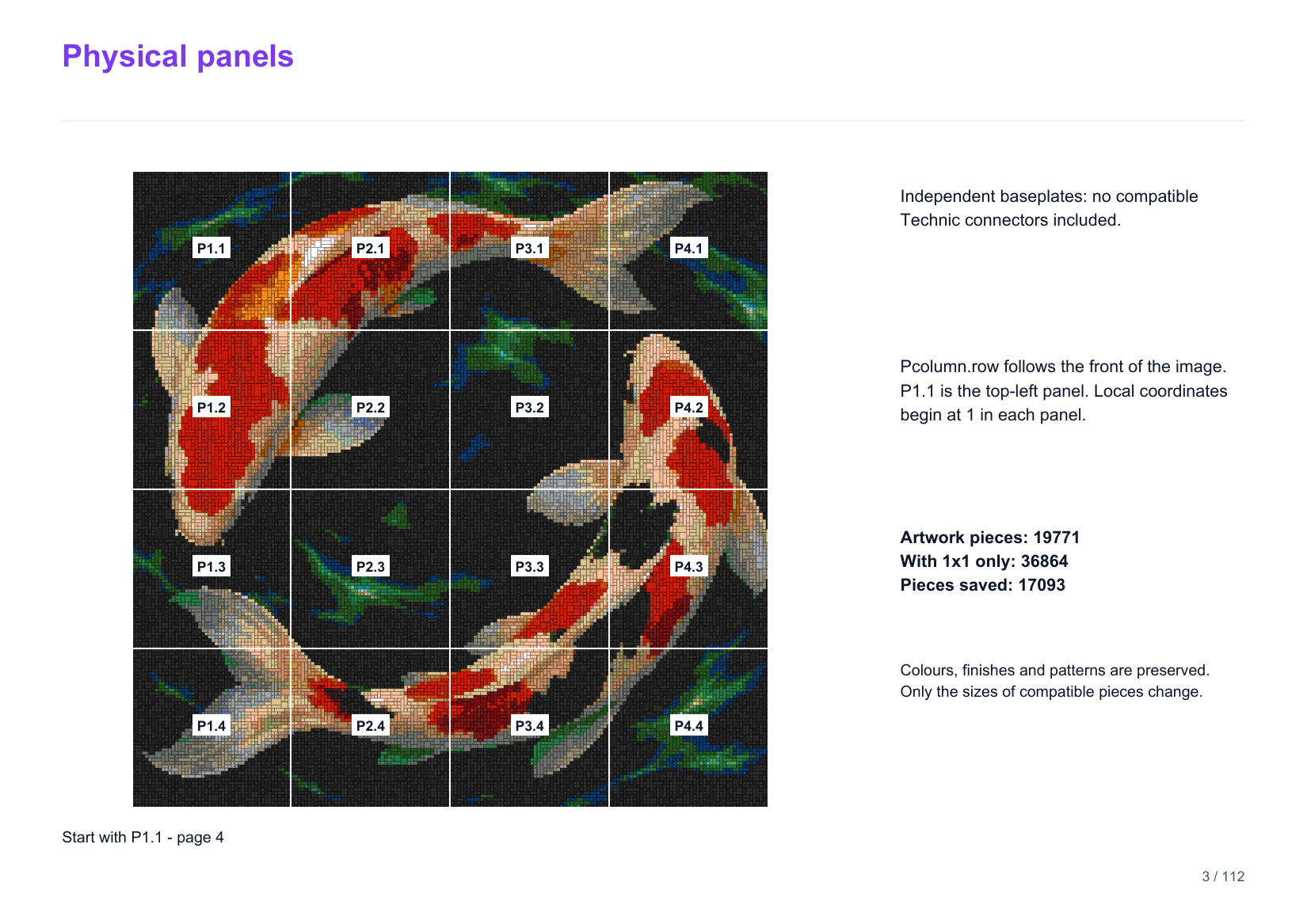
Page 3 of the Koi Club build guide divides the pond into sixteen 48 × 48-stud panels. The upper-right corner is P4.1, which makes it easy to find that same tail in the instructions.
Turn to page 22 for the first sheet of that panel. Each outlined rectangle represents one piece, and the number inside identifies its color in the local list.
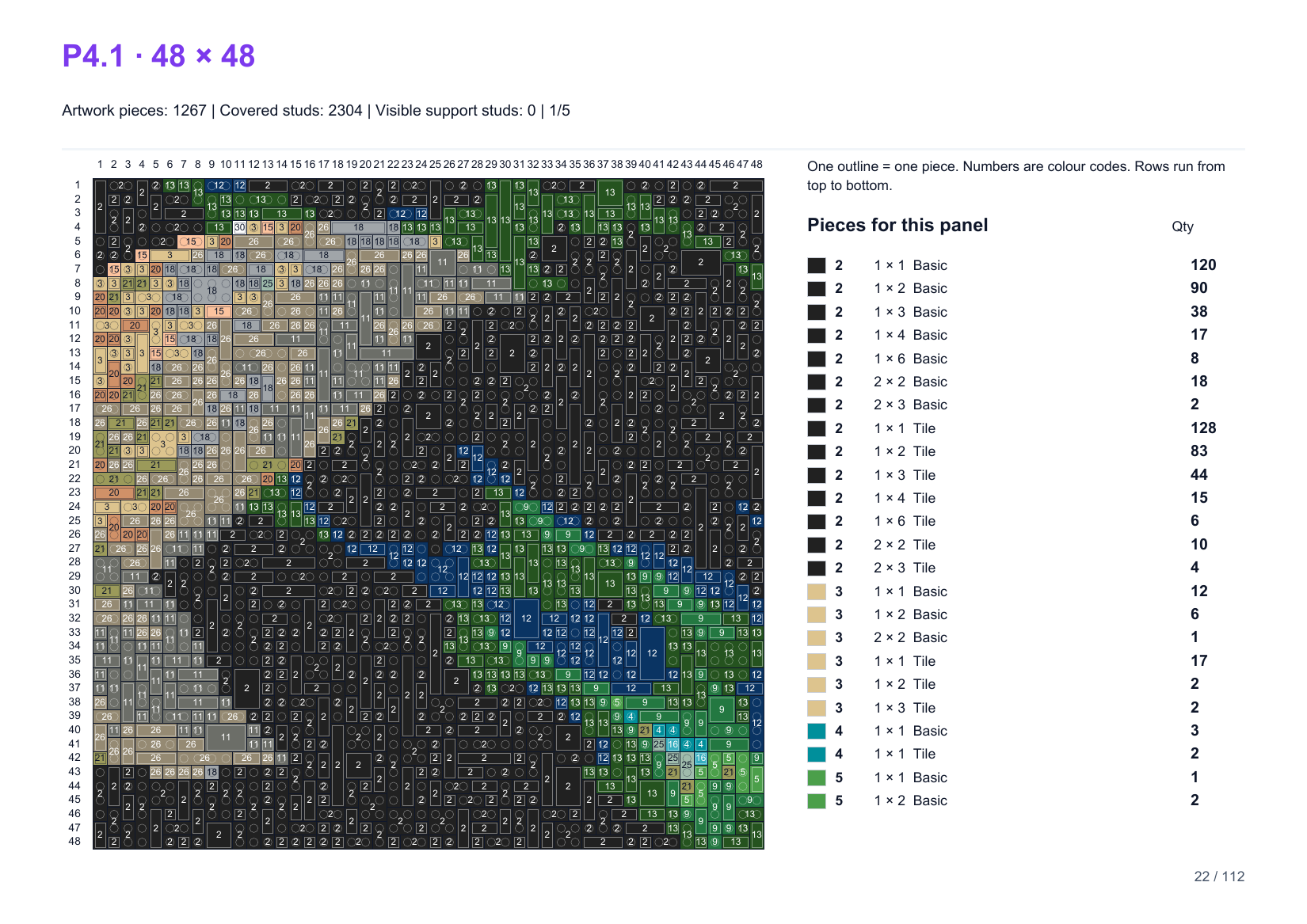
It’s a satisfying way to look at the artwork twice. Up close, you can follow the edge of a fin one rectangle at a time. Step back, and the first thing you see is two fish swimming in a circle.

0 comments
to join the discussion.